Pole Barn & Metal Building Insulation: Stopping Condensation in Weld County
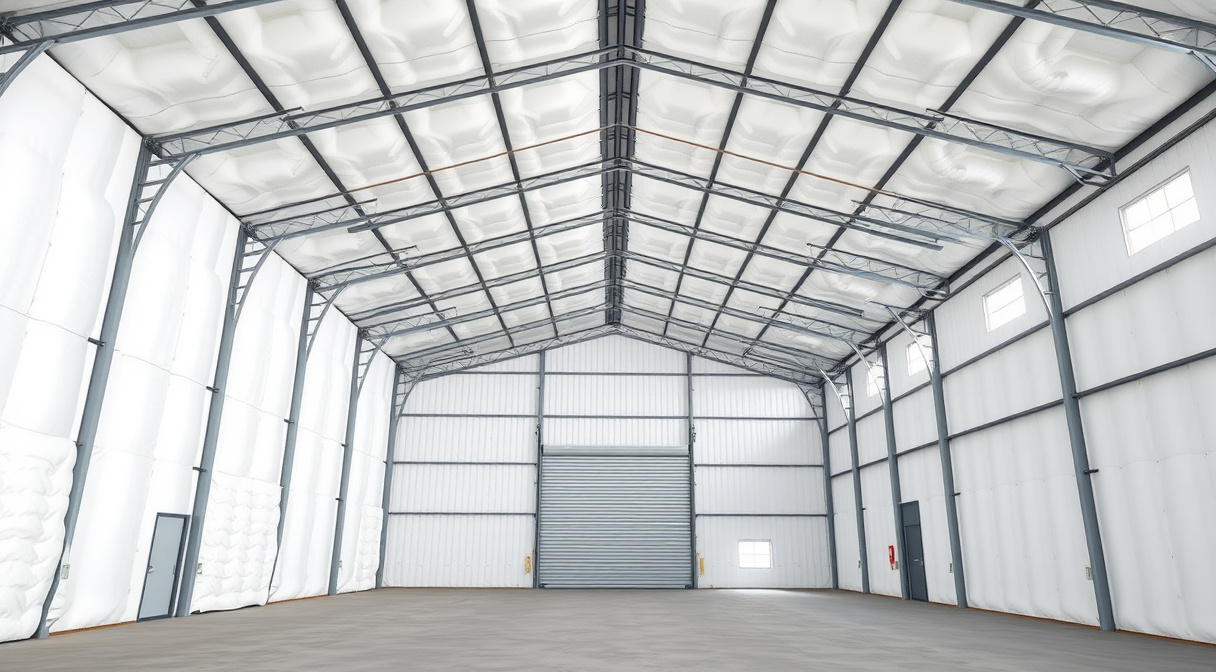
If you own a pole barn, shop, or metal building anywhere in Weld County, you've probably seen it: water dripping from the underside of the steel roof on a cold morning, pooling on the floor, rusting the structure, and soaking whatever's stored below. It's one of the most common — and most misunderstood — problems with metal buildings on the high plains. The good news: it's not a mystery, and it has a proven fix.
Why metal buildings sweat
Condensation is simple physics. Warm air holds more moisture than cold air. When the warm, moist air inside your building — from heaters, vehicles, animals, stored hay, or just daily use — rises and hits the cold steel roof and walls, the metal chills that air below its dew point and the moisture condenses into water. On a cold Weld County morning, that means it rains inside your barn.
The steel is the problem: it's a perfect cold condensing surface, and it conducts the outside cold straight to the inside air. Anything that leaves that cold steel exposed to your inside air will keep sweating.
Why fiberglass doesn't fix it (and can make it worse)
The instinct is to throw fiberglass batts or a vinyl-backed blanket up against the steel. The problem is that air can still reach the cold metal through and around fiberglass, so condensation still forms — now hidden behind the insulation where you can't see it. Worse, the fiberglass soaks up that moisture, loses its R-value, sags, and can promote rust and mold against the steel. Many of the worst metal-building moisture problems we're called to fix started with fiberglass.
The fix: closed-cell spray foam on the steel
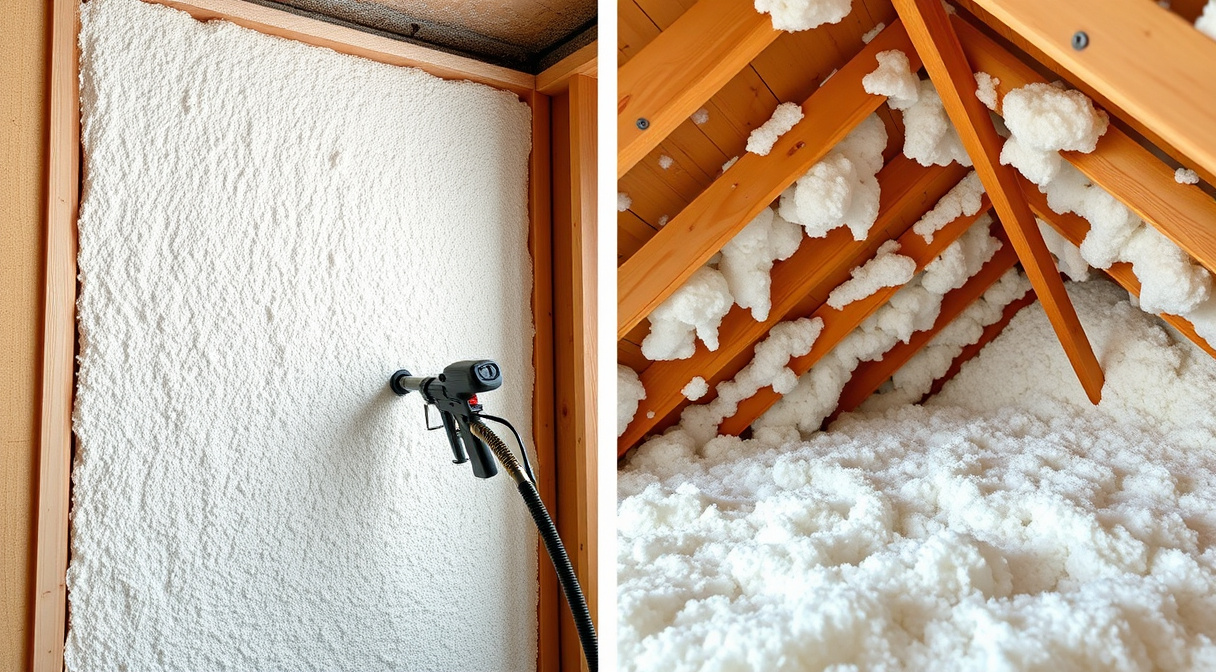
The reliable solution is closed-cell spray foam applied directly to the underside of the metal roof and walls. It works because it does three things at once: it bonds tightly to the steel so no air can reach the cold surface, it insulates the steel so the interior surface stays warm enough to never hit the dew point, and it acts as its own moisture and vapor barrier. Eliminate the cold condensing surface and seal out the air, and the condensation simply stops.
Closed-cell foam also adds rigidity to the building and won't sag, absorb water, or lose performance over time the way fiberglass does. It's the standard for a reason.
How much foam do you need?
It depends on your goal:
- Condensation control only (cold building): a thinner closed-cell 'flash coat' is often enough to stop the drip and protect the structure — the budget-friendly option for unheated storage.
- A heated shop: a thicker closed-cell envelope on roof and walls to hold heat and stay comfortable to work in through winter.
- Finished living space (barndominium): a full system that hits code R-values (roughly R-38 roof / R-25 wall) — often closed-cell foam plus additional insulation.
Matching the foam to how you actually use the building is how you avoid overspending while still solving the problem.
New building or existing — both work
We insulate both new metal buildings (coordinated with your builder while the steel is clean and accessible) and existing pole barns and shops. For an existing building, we just need clean, dry steel for the foam to bond properly — we handle the prep. Either way, the result is a building that stays dry, holds heat, and protects everything inside.
Get the drip fixed for good
No local installer specializes in this the way we do, and it's exactly the kind of high-plains problem we built this company around. If your metal building or pole barn is sweating, we'll assess it, explain your options honestly, and give you a free quote to fix it for good. Call 844-967-5247.
Frequently asked questions
Apply closed-cell spray foam directly to the underside of the metal roof and walls. It bonds to the steel, keeps the interior surface warm enough to never hit the dew point, and seals out the air and moisture that cause condensation. Unlike fiberglass, it won't absorb water or sag, so it fixes the problem for good.
Both work. We insulate existing pole barns and shops as well as new builds. For an existing building we just need clean, dry steel for the foam to bond — we handle the prep. New buildings are ideal because the steel is clean and accessible, but retrofits are very common and effective.
Ready for a free quote?
Tell us about your home or building and we'll build a clear quote — rebates included.