Insulation in Greeley & Northern Colorado: 2026 Cost, R-Value & Metal-Building Guide
If you own property in Greeley or anywhere across Weld County, insulation is one of the highest-return improvements you can make — and one of the most confusing to price, especially once you factor in barns and metal buildings alongside the house. This guide fixes that. We'll walk through what insulation actually costs by type, the R-values your Northern Colorado home and buildings genuinely need, how to stop the condensation that plagues metal structures out here, and — the part almost nobody explains — how to stack Xcel and federal rebates to bring the price down.
Whether you're fighting a drafty farmhouse, a sweating shop, brutal winter heating bills, or planning a new build, by the end of this you'll know what a good project should cost, what R-values to insist on, and how to pay less for it.
Why insulation matters so much on the high plains
Northern Colorado is a demanding climate. Winter nights drop into the single digits, the wind rarely quits, the sun is intense at altitude, and — a problem unique to our region's building stock — steel buildings sweat when warm inside air meets cold metal. Your insulation and air sealing are the only things standing between all of that and your comfort, your energy bill, and the equipment stored in your barn. A poorly insulated building fights the weather every day; a well-insulated one works with it.
There's also a local reality most guides ignore: Weld County isn't just houses. It's farms, shops, pole barns, and metal buildings, plus one of the fastest-growing new-construction corridors in the state. Insulating here means knowing homes AND buildings — and that's exactly what this guide covers.
The R-values your Northern Colorado property needs
Insulation is measured in R-value — its resistance to heat flow. Higher R-value means better insulation, and how much you need depends on your climate zone. Most of Weld County sits in a cold zone (roughly Zone 5). Here are the targets that matter:
- Attic (home): R-49 to R-60. The big one — most heat escapes through the attic, and many older homes sit at R-30 or less.
- Exterior walls (home): around R-20 or higher, depending on wall construction.
- Metal building / pole barn roof: commonly around R-38 for a heated or finished building.
- Metal building / pole barn walls: commonly around R-25 for a heated or finished building.
- Floors over unconditioned space: roughly R-30.
For a cold-storage barn you don't heat, the goal shifts from R-value to condensation control — often just enough closed-cell foam to stop the drip. For a heated shop or a finished barndominium, you want the full R-value targets above. Matching the insulation to how you actually use the building is where money is saved or wasted.
Insulation cost by type — homes
Cost depends on the material, the area, the R-value you're targeting, and access. Here's what to expect for the common home services on a typical Northern Colorado house. These are general ranges to help you budget; your quote will be specific.
Attic insulation (blown-in)
Topping up or replacing attic insulation with blown-in cellulose or fiberglass is the most common project and one of the most cost-effective. For a typical home, an attic top-up with air sealing commonly runs from roughly $1,800 to $4,500, depending on square footage, the depth needed to reach R-49–R-60, and whether old insulation must be removed. It's also the project with the fastest payback.
Spray foam insulation
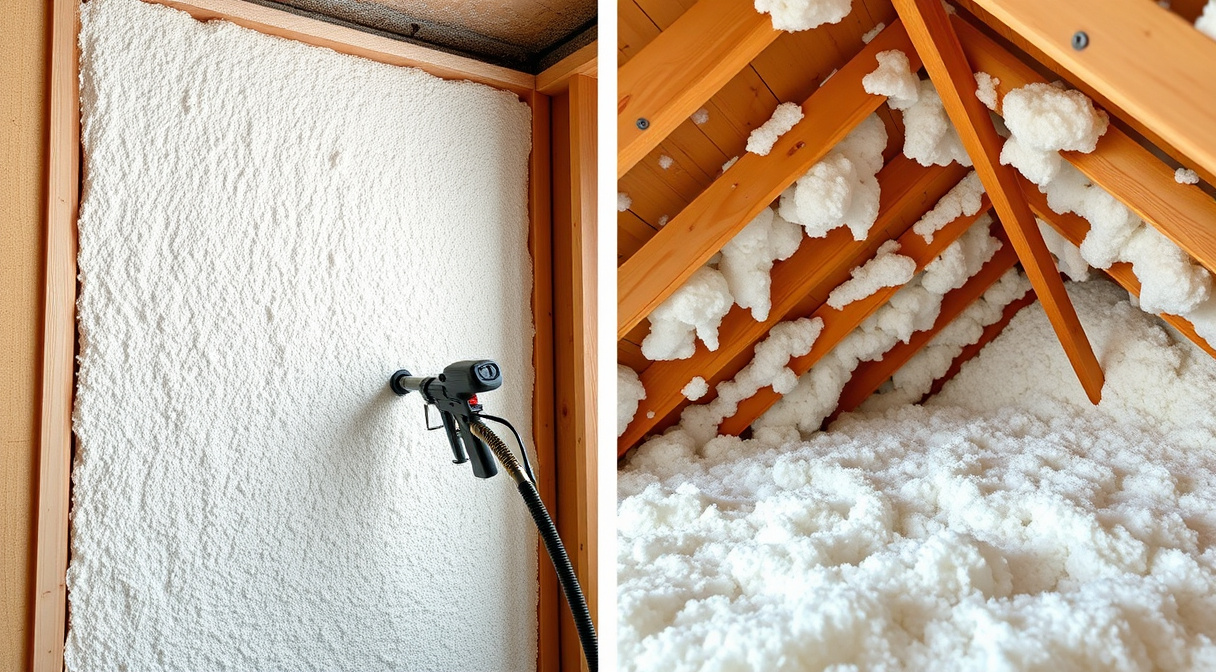
Spray foam costs more per square foot than blown-in or batt because it does more — it insulates, air-seals, and (closed-cell) controls moisture, with the highest R-value per inch. Targeted spray-foam work (a rim joist, a crawlspace, a section of wall) might run $1,500 to $4,000, while larger foam projects scale from there. It's a premium product used where its performance pays off.
Batt & roll insulation
Batts are the economical choice for open framing in new construction and remodels. Costs are driven by area and whether you choose standard fiberglass or premium mineral wool. For a room or section of open wall, batt insulation is typically the lowest-cost option per square foot — the key is professional installation so the batts actually deliver their rated R-value.
Insulation cost by type — pole barns & metal buildings
This is where Northern Colorado differs from most of the country, and where owners have the hardest time finding real numbers. Metal-building and pole-barn insulation is priced by the square footage of surface to cover, the foam thickness, the ceiling height, and how the building will be used. A couple of rough examples to frame it:
A 40x60 pole barn
For a 2,400-square-foot pole barn, a condensation-control flash coat of closed-cell foam on the roof deck costs far less than a full heated envelope. A thin flash coat purely to stop the drip is the budget option; a full closed-cell envelope on roof and walls to make the building comfortably heatable is a larger investment. The right choice depends entirely on whether you're storing equipment or working in there all winter — and we'll walk you through both so you can decide.
A 30x50 metal building or shop
For a 1,500-square-foot metal shop you want to heat and work in, a closed-cell foam envelope delivers the insulation and the moisture barrier the steel needs. Finished space like a barndominium adds the requirement to hit code R-values (roughly R-38 roof / R-25 wall), which means more foam or a foam-plus-batt hybrid. Height matters too: a tall building has more wall area and needs lifts to reach it, which affects labor.
The metal-building problem: condensation
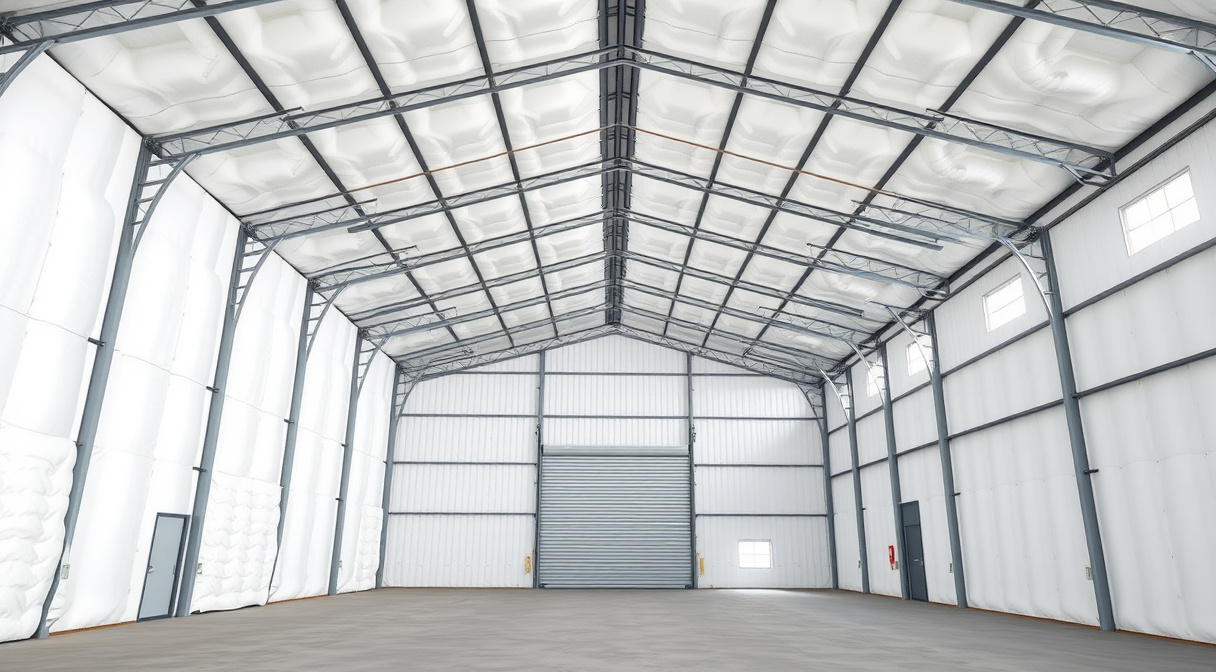
If you own a metal building or pole barn in Weld County, you know the drip. When warm, moist inside air (from heaters, animals, vehicles, or just daily use) hits the cold steel roof and walls, it condenses into water that rains down — rusting the structure, ruining stored goods, and soaking anything below. It's the number-one complaint we hear, and traditional insulation like fiberglass batts doesn't fix it; it can actually trap moisture against the steel and make it worse.
Closed-cell spray foam applied directly to the underside of the metal is the proven solution. It bonds to the steel, eliminates the cold condensing surface, and seals out both air and moisture — insulating and waterproofing the envelope in one step. Even if you never heat the building, a foam flash coat purely for condensation control can be worth it to protect the structure and everything in it. This is the single biggest reason building owners across the county call us.
Air sealing: the step that makes everything work
The most common mistake we see in homes is adding insulation without air sealing first. Insulation slows heat, but it does not stop air movement — and on the windy high plains, wind-driven air leakage is a huge share of heat loss. If your attic floor is full of leaks around can lights, top plates, and penetrations, air moves right through and around the insulation you just paid for. We always seal first, so every dollar of new R-value actually performs. It's the cheapest, highest-ROI work in any project.
The rebates: how Northern Colorado owners pay less
This is the part most local contractors barely mention, and it can save you real money. Insulation and air-sealing upgrades can qualify for several stacking incentives:
Xcel Energy rebates
Xcel Energy, the utility for most of the area, offers rebates for qualifying insulation and air-sealing improvements. Amounts and requirements change over time, and the rebates typically require documentation — often including a home energy assessment and proof of the work. It's the most commonly available incentive for local homeowners, and the one we build most projects to qualify for.
Federal energy tax credit (25C)
The federal Energy Efficient Home Improvement Credit (Section 25C) lets homeowners claim a tax credit for a portion of the cost of qualifying insulation and air-sealing materials, up to annual limits. It applies on top of utility rebates, so you can often combine a Xcel rebate with a federal tax credit on the same project. Confirm the specifics with your tax advisor, but for most insulation upgrades it's real money back.
How to choose the right insulation
There's no single 'best' insulation — there's the best product for each surface. The strongest results combine materials intelligently:
- Home attic floor: blown-in cellulose or fiberglass over a properly air-sealed deck, to R-49–R-60.
- Metal buildings & pole barns: closed-cell spray foam on the steel for insulation and condensation control.
- Basements, crawlspaces, rim joists: closed-cell spray foam for its air seal and moisture barrier.
- Open walls in new construction: batts or dense-packed blown-in.
A good contractor designs the system, not just the product — and is honest about where a premium material like spray foam is worth it versus where blown-in or batt will do the job for less.
The mistakes that cost owners the most
A few avoidable errors show up again and again in Northern Colorado:
- Adding insulation without air sealing first — the most common and costly home mistake.
- Putting fiberglass in a metal building — it can trap moisture against the steel and worsen condensation.
- Under-insulating the attic — stopping at R-30 when the climate calls for R-49 to R-60.
- Ignoring wind-washing — leaving the attic edges exposed to wind that strips their performance.
- Leaving rebates on the table — not documenting the work or designing it to qualify.
- Covering over a problem — insulating over wet, moldy, or rodent-damaged material instead of removing it.
How long does insulation last, and when should you upgrade?
Quality insulation is a long-term investment. Closed-cell spray foam and properly installed batts can last the life of the building. Blown-in cellulose and fiberglass last for decades, though loose-fill can settle over time, and any insulation can be compromised by roof leaks, pests, or renovation. As a rule, insulation itself rarely 'wears out' — but the building around it changes, and standards rise.
The clearer signal that it's time to upgrade is performance, not age. If your home has rooms that never get comfortable, high winter bills, ice dams, or an attic you know is below R-49 — or if your metal building is still sweating despite whatever's up there now — those are all reasons to act regardless of how old the insulation is. Homes and buildings put up more than 15 or 20 years ago were very often insulated to standards well below today's targets, which means there's usually a worthwhile, cost-effective upgrade waiting.
Should you DIY or hire a pro?
Some insulation work is genuinely DIY-friendly — a homeowner can add a few batts in an accessible space or caulk obvious gaps. But the projects that deliver the biggest gains are the ones where professional work pays off most. Blown-in insulation requires a commercial-grade blower and the experience to install to an even, verified depth. Spray foam — especially the closed-cell foam that metal buildings need — must be applied at the correct ratio, thickness, and substrate temperature to cure and bond properly, which is genuinely professional work with real safety requirements. A botched foam job on steel is expensive to fix.
There's also the rebate angle: many incentive programs require professional installation and documentation, so a DIY job can forfeit rebates that would have offset much of a professional job's cost. For the high-impact work — attic systems, spray foam, and any metal-building or pole-barn insulation — hiring a pro usually delivers better performance, captured rebates, and a result that lasts. We're always happy to tell you honestly which parts of a project you could reasonably tackle yourself and which are worth leaving to a crew.
Getting it right — and getting it for less
The best insulation project isn't the cheapest one or the one with the most foam — it's the right materials, on the right surfaces, over a properly air-sealed and moisture-controlled envelope, built to the R-values our climate demands, with every available rebate captured. Done well, it makes your home more comfortable, your barn dry and usable, and every building cheaper to run.
That's exactly what we do. GreeleyInsulation.com is a local contractor focused entirely on insulation for Northern Colorado homes and buildings — spray foam, blown-in, batt, attic systems, metal-building and pole-barn insulation, removal, and energy audits — with rebate guidance built in. Tell us about your property and we'll put together a free, no-pressure quote that shows the real net cost after rebates. Call 844-967-5247 to get started.
Frequently asked questions
It depends on the surface area, ceiling height, foam thickness, and whether you're controlling condensation only or fully heating the building. A thin closed-cell flash coat for condensation is the budget option; a full heated envelope on roof and walls costs more. We provide an itemized free quote after assessing the building — call 844-967-5247.
For a heated or finished building in our climate zone, common targets are around R-38 for the roof and R-25 for the walls. A cold-storage building may only need enough closed-cell foam to control condensation. We spec it to how you use the building.
In most cases, yes. Xcel Energy rebates and the federal 25C Energy Efficient Home Improvement Credit apply through different mechanisms, so homeowners can often claim a utility rebate and a federal tax credit on the same qualifying insulation project. We help you design the work to qualify and document it; confirm the tax specifics with your advisor.
Ready for a free quote?
Tell us about your home or building and we'll build a clear quote — rebates included.